What are the editing techniques that apply to both filmmaking and writing? While it may seem as if they are two completely different jobs, editing film and editing prose come down to the same goal: storytelling.
Here’s how film editing techniques can improve prose, from the first draft to the final polish.
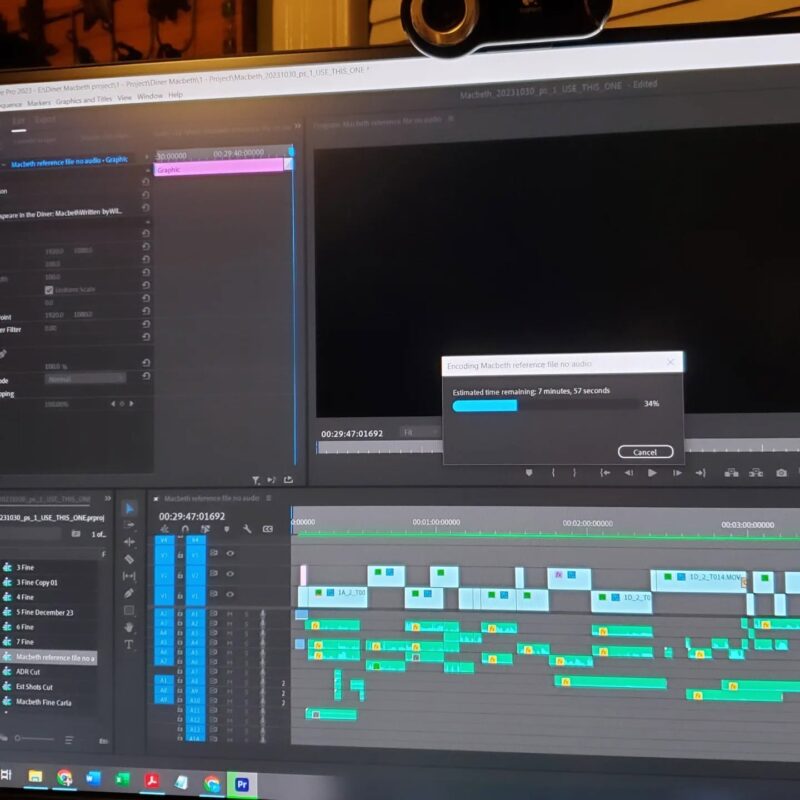
What is film editing?
Film editing is the process by which all footage, whether shot digitally or on film, is pieced together into a single narrative with all aspects of the movie (images, sound, graphics, special effects, musical score) placed in a timeline that makes up the complete film.
Film editing is part of the post-production process, taking place after all the footage is shot and on-set sound has been captured. While film editing happens in post, many productions include the editor in the planning process, called pre-production, and some directors even have the editor on set, cutting sequences as they are filmed. Edgar Wright’s Baby Driver is an example of on-set film editing.
Once the editor has all the footage and has sorted it into folders (called bins), they organize it in order: Scene 1, Scene 2, etc.
Film editing steps
The different steps of film editing start with stringouts, assembly cut, fine cut, final cut, picture lock, sound lock, and color correct.
Stringouts. All the takes for each scene are put into a long sequence, so the editor can compare performance and technical issues and choose the best clip for the edit. These are also used for directors to review footage and are sometimes put together at the end of each day (dailies) for review by director, producers, and cast.
Assembly. A very rough file that includes selected clips that are put together in sequence, called a timeline. An assembly is a first draft of what will be the finished film. Nothing is set in stone. Clips may be swapped out, or scenes even reshot if necessary. Every editor hates their assembly cut. It’s an ugly baby that has to be made into a beautiful swan.
Fine cut. This is where the editor starts sculpting the movie. This includes trimming clips from the beginning or at the end, depending on what works best. There is never just one fine cut. The editor fine tunes every decision, sometimes down to the millisecond. The fine cut can take a very long time. This is where the movie comes together.
Final cut. Just like a manuscript file named storyfinaldraft.doc, the final cut is never final. This is the cut that gets shown to the director and producer for notes and will get changed up at the last minute. But this is the closest to what the movie is going to look like before sound design and color correction.
Picture lock. The cut is approved. There will be no more changes to the edit. This file goes to the color correct specialist and to the sound designer for audio improvement, sound effects and foley, and score.
The edit is often referred to as the final draft of the screenplay.
What is book editing?
Book editing is a two-part process. In the first part, the author edits their own novel. In the second part, the manuscript goes to an editor for a final process.
Remember the assembly cut? A first draft of a book or short story is the same ugly baby. Writing is rewriting as the saying goes. The writer assembles that first cut of the book, and then begins the process of refining the story.
At least with writing you don’t have to go back and reshoot footage if you don’t have it. You can just write it out of your imagination. As the rewriting process continues, with input from your first readers, the writer sculpts the manuscript just as the editor sculpts the film.
This is where you catch typos and narrative inconsistencies, such as continuity issues (the character has brown eyes in one scene, and blue eyes in the next).
This may take even longer than the actual first draft took, but at the end of the process, you have a book.
When the manuscript goes to a publishing house and an editor is attached, or the author goes to an independent editor if the book is to be self-published, a different procedure happens. The editor may request changes in character development and motivation. They may also look at plot and structure and make suggestions about how to fix issues. They may look at the story with an eye toward marketing, genre, and other concerns. The editor and the author will have a conversation about these notes, and it’s up to the author to make the changes or not.
After this story edit, the manuscript goes out for copyediting and proofreading. We all know this step because we see it when it’s been skipped. Books with poor grammar, multiple typos and misspellings are infuriating to read.
Once the copyediting and proofreading is complete, the author approves the changes, answers any final notes, and the manuscript goes out for cover art, typesetting, audio book production, and printing (if a physical book).
How can film editing help the writer?
To be a writer is to be an editor. Just as writing is rewriting, if you have an editor’s mindset it can help when beginning the first draft. Since you already know the manuscript is going to go through many drafts before it’s finalized, this can free you up in many ways.
Write out of sequence. Just like films are shot out of sequence, you don’t need to start your novel at the beginning and write to the end. You can write difference scenes or chapters first, because you know where you need to go to get there. This works whether you are a plotter or a pantser. Write the kissing scene or the fight scene, and it’s ready to slot into the timeline of your novel when you need it.
Shitty first drafts. Anne Lamott beautifully talks about the freedom of writing a shitty first draft in her book on writing, Bird by Bird. This is your assembly cut. It’s your ugly baby. Ugly babies make beautiful swans. Turn off your internal editor, make notes where you want to change things later, and you can make great headway.
Edit for story and character. The best film editors will tell you – they edit for performance, as Thelma Schoonmaker talks about here. Film editing should be invisible, although there are certainly films where the editing is flashy and is meant to be. Editors choose the takes that showcase the actors at their best and that serve the overall story. This means that small continuity errors, those mistakes that creep in that the Internet loves to catch, are the least of their worries. (Continuity is still important. The script supervisor is responsible for catching as many continuity errors as possible.)
Kill your darlings. For writers, editing for story means killing darlings. But it has to be done, so your story can shine. Film editors kill darlings too. This may mean a performance that strikes the wrong note for the story, or a technical issue that can’t be worked around. It might be that a subplot has to be deleted to make the film come in under time. As hard as it is, it’s the right decision for the story.
Trust other opinions. Writers and film editors have to get input from other people. The key is in how to act on the notes you get. This can be a tough skill to master because it involves being a champion of your vision but you also have to be humble enough to take notes. A good film editor deals with this all the time. Just think about your favorite movies, and understand that these conversations went on during the entire editing process.
Adopting the film editor mindset
While becoming a film editor may not be the right path, there’s one way to capture the film editor mindset. This is to find interviews with or read about award-winning editors like Thelma Schoonmaker, Martin Scorsese’s film editor, or Walter Murch (Apocalypse Now, The Godfather), or Marcia Lucas (Star Wars, Taxi Driver). They all have different methods, but they all focus on the same thing: write for character. Write for story. Fill the world with sound and color.
Think about the edit as you’re writing your first draft. See the story come together in the roughness, and chip away to find its gracefulness.
Ever since I started film editing, it’s developed my editor’s eye for story. While the media is different, it shares the same root – storytelling. It’s helped me with pacing, with plot, and with scene setting. The telling detail, which I’ve written about before, is as key to film as it is to prose.
There’s always been a visceral click when I am writing or editing and the work comes together. Now that click happens when I carefully trim clips and snap them together on the timeline. The cut is seamless, and the story works.
Can understanding film editing help you write better? I think it can. Read up on it, try your hand using any of the free tools out there, and see what happens. I’d love to know where you land.

1 Comment
Patrice · August 2, 2026 at 10:54 am
tests